Mastering Fear and Worry
I’ve heard this about worry: “People do it all wrong. They go to Vegas, put all their money on a number, set the wheel in motion, then make themselves sick with worry after the ball drops as it bounces around on the wheel.
The time to worry is before they make the decision. Once the ball drops, worrying is pointless.”
I’ve wasted a lot of time ignoring that advice.
Not long ago, I faced two personal crises whose outcomes could have been devastating. In the throes of each, I read anything I could find in an effort to master the worry and fear that consumed me—despite the fact that each outcome was truly beyond my control.
I learned a lot about the brain’s preference for fear and worry, and ways to refocus my attention to reset the norm.
I am lucky that the outcome for each personal challenge I faced turned out all right. Yet, because the outcome for each was positive, I worried that all I did was reinforce a habit I knew was awful to give in to.
And yes, I did just say I worried about that.
Do you worry that you worry too much? I know. We see the irony and we still can’t stop.
But is it, you know, normal to worry? The good news is, yes it is. The bad news is, yes it is.
We’re wired that way. Literally, there is a part of our brain that does nothing but scan the horizon for anything that resembles danger and, when found, puts us on high alert.
But that doesn’t mean we can’t subdue it and stop it from stealing our joy.
Here’s what I learned:
Fear feeds on the energy we give it. Unchecked, it can drive us to our knees. But it can also be managed.
I don’t know that anyone ever masters fear. It lives in the reptilian part of our brain that doesn’t respond to reason. But it can be dampened in two key ways:
First, acknowledge it. Greet it warmly, as Thich Nhat Hanh illustrates with, “Ah, Fear, I see that you are here again. Welcome.”
He underlines the need to set ourselves apart from fear by saying, “I feel fear,” instead of “I am afraid.” It is subtle, but important. If it is a separate object, we can acknowledge it as just one of many things we choose to focus upon.
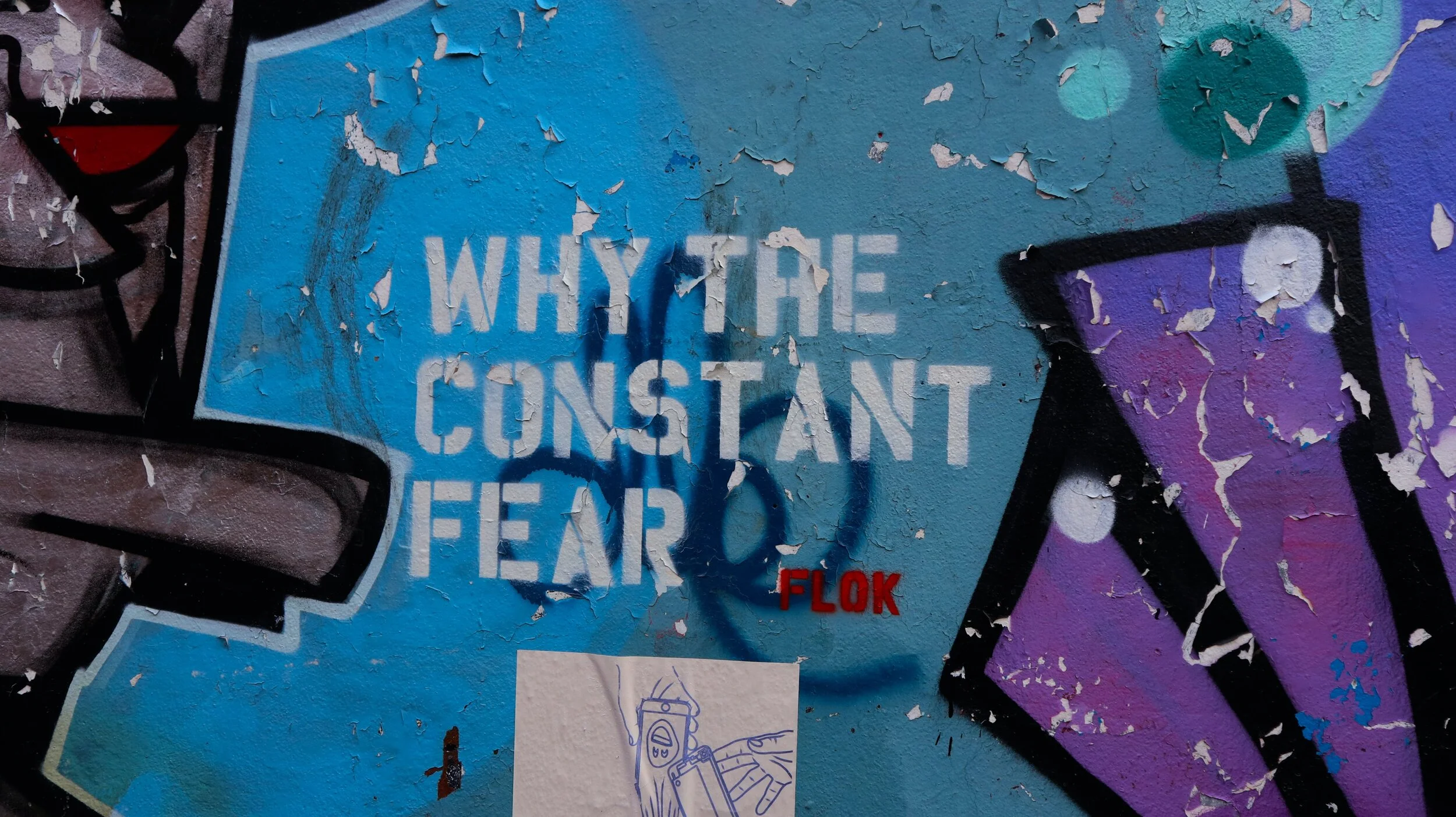
“Ah, Fear, I see that you are here again.”
Thich Nhat Hanh
This allows the second way to manage fear: place your attention elsewhere. Direct your mind to think of something else—a fun memory, a goal for the future, a familiar prayer of comfort. Dwell here instead.
When your mind wanders back to fear, gently redirect it. Then do this again and again and again. It will be exhausting at first, but you will find your brain eventually traveling a new positive path you are creating instead of the familiar track of fear.
And as trite as it sounds, it is true that starting and ending your day with gratitude helps. Fear may arise unbidden, but it can’t stay unless you feed it. Fear or gratitude: it is startling when you first experience the realization it is a choice.
I am not worry-free but I can say that I handled the second fear-inducing challenge in my life much better than the first. The brain can be trained, and fear can be managed.
Remind yourself of all you’ve lived through in your life up until now and you will realize you are stronger than you—or your fear—give yourself credit for.
Make back-up plans should things head south, but don't wallow there. In my case, I put options in motion if a less-than-positive outcome happened and then slept like a baby at night. As someone who has found reasons to worry my entire life, that was a first for me.
The Hindu priest and former monk Dandapani instructs, “Your mind is like a dark room of many emotions. Awareness is like a ball of light that you direct.”
Do you choose to light up the areas of hope and love, or the recesses of fear?
When you realize it truly is a choice, you have taken back your power. And maybe…just maybe…that really is mastering fear and worry after all.
Photo by Priscilla Du Preez on Unsplash
Photo by Simon Watkinson on Unsplash