Find the Person Who Can Say "Yes"

While protocol varies by organizational culture, hierarchy is entrenched in Corporate America. And if you wish to change your circumstances at work, there are two hierarchies to which you need to pay attention: the hierarchy on paper and the hidden hierarchy. Working through the former is how we are told things get done; working through the latter is how they actually get done.
We need to understand where to bring ideas for change because what we want to propose may or may not be greeted with enthusiasm within our chain of command. If we want to change the status quo—via role, project, maybe even department—we will create disruption. By default this can make things difficult for our management team to accommodate our change. So before bringing up the subject with your manager—though this person may ultimately be your best advocate—you may wish to consider some of the ideas and preparations below.
FIRST
Give serious thought to who truly needs to support the change in order for it to happen. Yes, at some point your manager may need to do so, but is it possible that someone else can approve the change, or at the very least, lend their support to a level at which saying “no” to your proposition is less likely to occur?
PREPARE
Consider who else will benefit from this change: therein lies your most likely champion. This person may also be the only one whose approval you need. At a minimum, you may wish to include them in determining how best to position yourself to get your idea approved.
SECOND
Reflect on how—or whether--this change will impact your immediate manager, your team, and levels higher up. Will your manager have the ultimate authority to grant implementation of your idea, or will approval need to happen higher up? For each level requiring approval, you need to think about how your idea will be received. If it will create disruptions up the chain, you must have a recommendation to counterbalance this or your chances of approval diminish with each additional approval required.
PREPARE
How can you propose your idea in a way that offers a workaround or alternate plan to lessen the impact of any disruption to status quo being proposed? This must be defined for each level that needs to approve the change.
THIRD
Determine how your idea will benefit those who need to say yes. You will need their support to move forward. As much as we’d like to believe people act altruistically, most organizational goals don't support this model. Everyone has goals and deadlines and if what you want to do or change puts those at risk—because you will be doing something different than your currently-assigned project—you may have a more difficult time garnering support.
PREPARE
Craft a recommendation for what you want based on how it will benefit those who must say yes. Include workarounds for any objections they may raise. Bring this first to the person who would be most likely to benefit from this change. They can support or facilitate—if not outright approve—this change. This may or may not be your immediate manager.
If you are lucky enough to work for a supportive manager you trust, by all means enlist their support at the outset. Note this will still require you to position your ask with ideas on how it can benefit them; if that’s really not do-able, ensure you can offer solutions to the challenges your change will mean for them.
Below is an example of how this can work:
Years ago, after learning the ancient Japanese healing art of Reiki energy work and becoming a Reiki Master, I wanted to find a way to bring this de-stress tool to the workplace. Though I could have proposed the idea to my manager, I thought about whether I needed to. My manager was not likely to derail my idea but may have easily recommended getting approval higher up the management chain. Since this risked the possibility of rejection without the requirement of approval, I chose to start with the person who could say “Yes.”
In noting the extreme anxiety new hires face in completing their Sales Academy certification requirements, I approached the head of the Academy with an idea to reduce their stress. I would join her on weekends at the office. While she set up shop to coach these new hires to deliver their final presentation and demo Monday morning—a requirement for “graduating”—I would turn a conference room into a “Reiki Room” and offer meditative Reiki sessions to students at no cost.
I outlined the benefits to her and her students and confirmed the legal and insurance requirements I met as required by my state to offer these sessions. And over the course of 18 months—until the program that extended over weekends was ended—I brought much appreciated stress-reduction and calm to any sales new hire who wished to take advantage of it during that period.
EVERYONE BENEFITED
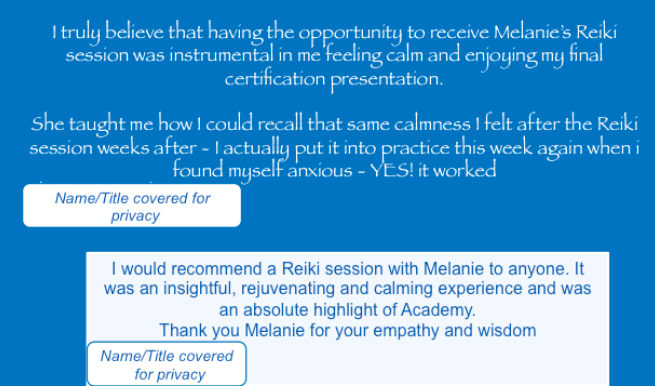
The sessions were perceived as yet one more wonderful thing our company offered new hires in the Academy, the students themselves raved about the sessions, and I got a chance to gain deep experience as a Reiki Master by immersing myself in numerous back-to-back sessions in a very short period of time.
I eventually brought my manager into the loop, securing his blessing as well as of that above him (resulting in a request from his higher up for a Reiki session of their own.) Even if you choose not to start there, getting your manager on board with your idea makes sense for several reasons. Remember, your overall success lies in your pitch, your progress, and your results, any of which may need to be shared multiple times with multiple people to begin—and carry on—what you want to do.
When you think that what you want to do is out of reach, ask yourself: “Is this more improbable than conducting Reiki sessions in full-on ‘woo-woo’ fashion at work, creating fans raving the experience contributed to their improved performance—even months later--as a result?” Yeah. Pro’lly not. Full steam ahead.

conference room
Industrial carpeting, bright, stay-awake lighting, rolling desks and chairs, hard angles and copious amounts of wiring everywhere. A very nice if not typical well-stocked conference/training room.
If you are lucky, the person who can say “Yes” to your idea is a supportive manager you trust. If you aren’t sure, find the person who is. Understand both hierarchies in your organization and work with the one that will get you what you want. If it is of benefit to both you and the organization, there is a way to make it happen.
Find it.
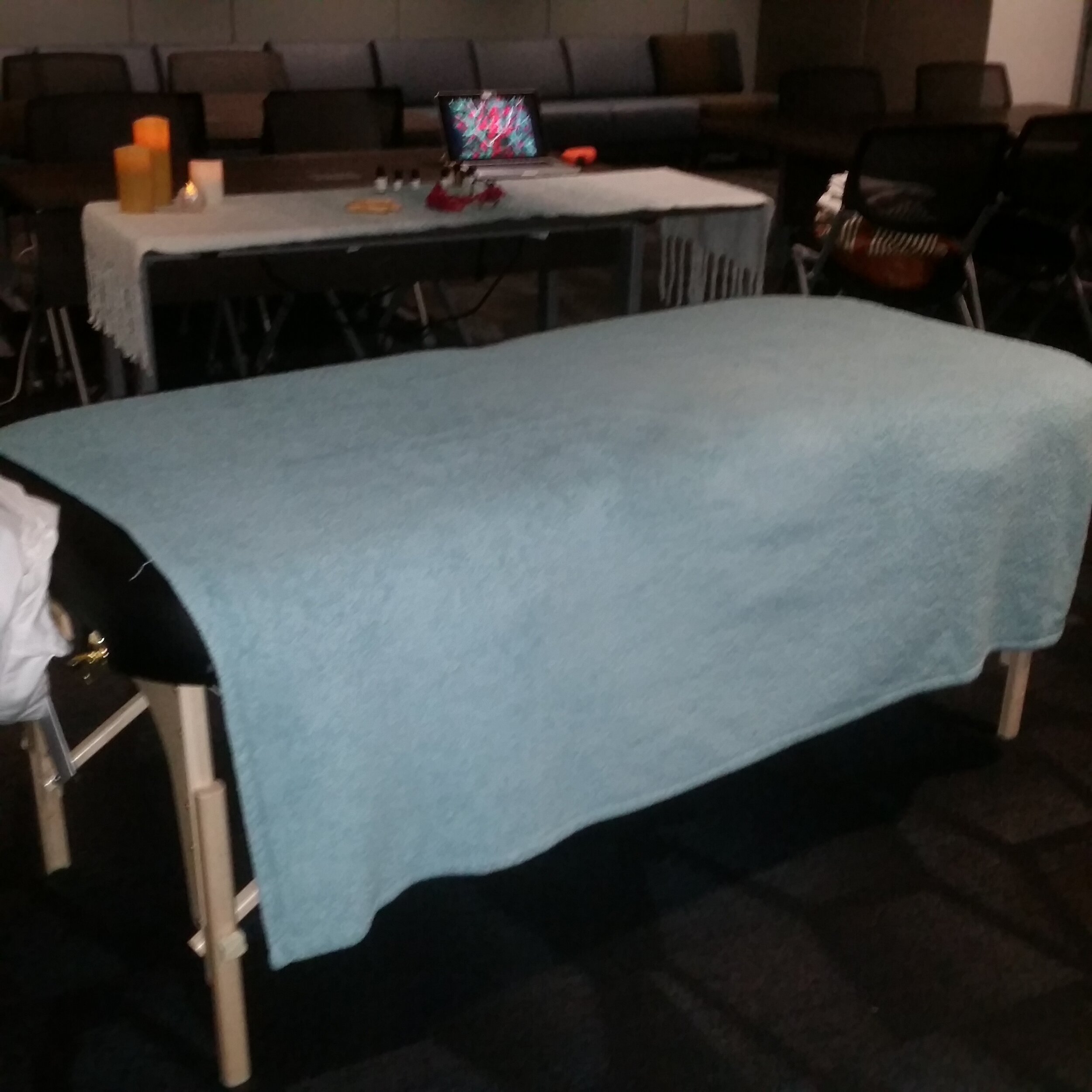
reiki room
A room filled with the sounds of a forest and Native American flute, palo santo wood and essential oil scents for aromatic ambiance, and many flameless candles in lieu of flourescent overheads greeted participants, providing instant calm upon entering a room that only hours before was a bright, sterile, down-to-business conference room.
WORTH NOTING: Reiki is NOT massage therapy. Energy movement is conducted without touch, save occasional light touch to hands, top of shoulders, sometimes palms against soles of feet to ground energy, and unlike Acupuncture, those receiving Reiki energy are fully clothed during a Reiki session.
Photo credits:
M. Erickson
JEShoots on Unsplash